
In a pristine land, we are the sum of our parts
Highcroft Hills is alive. Only 3000 kms from Antarctica, acres of old-growth forests support pollinators, organic matter feeds microbes in the soil, and life is replenished by oceanic rainfall and clear, consistent light. The terroir exists as a living organism.
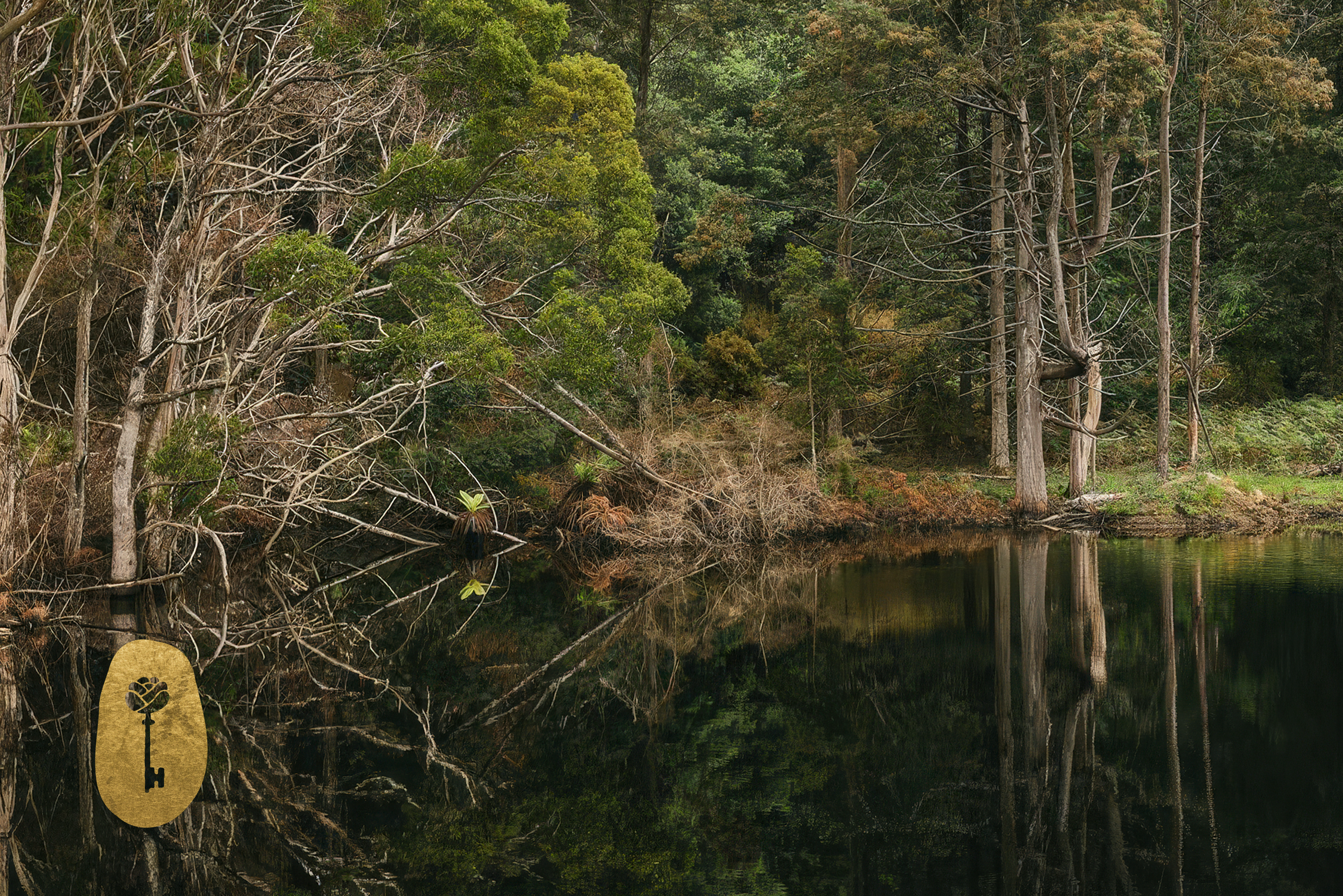
Preserving the purity of place
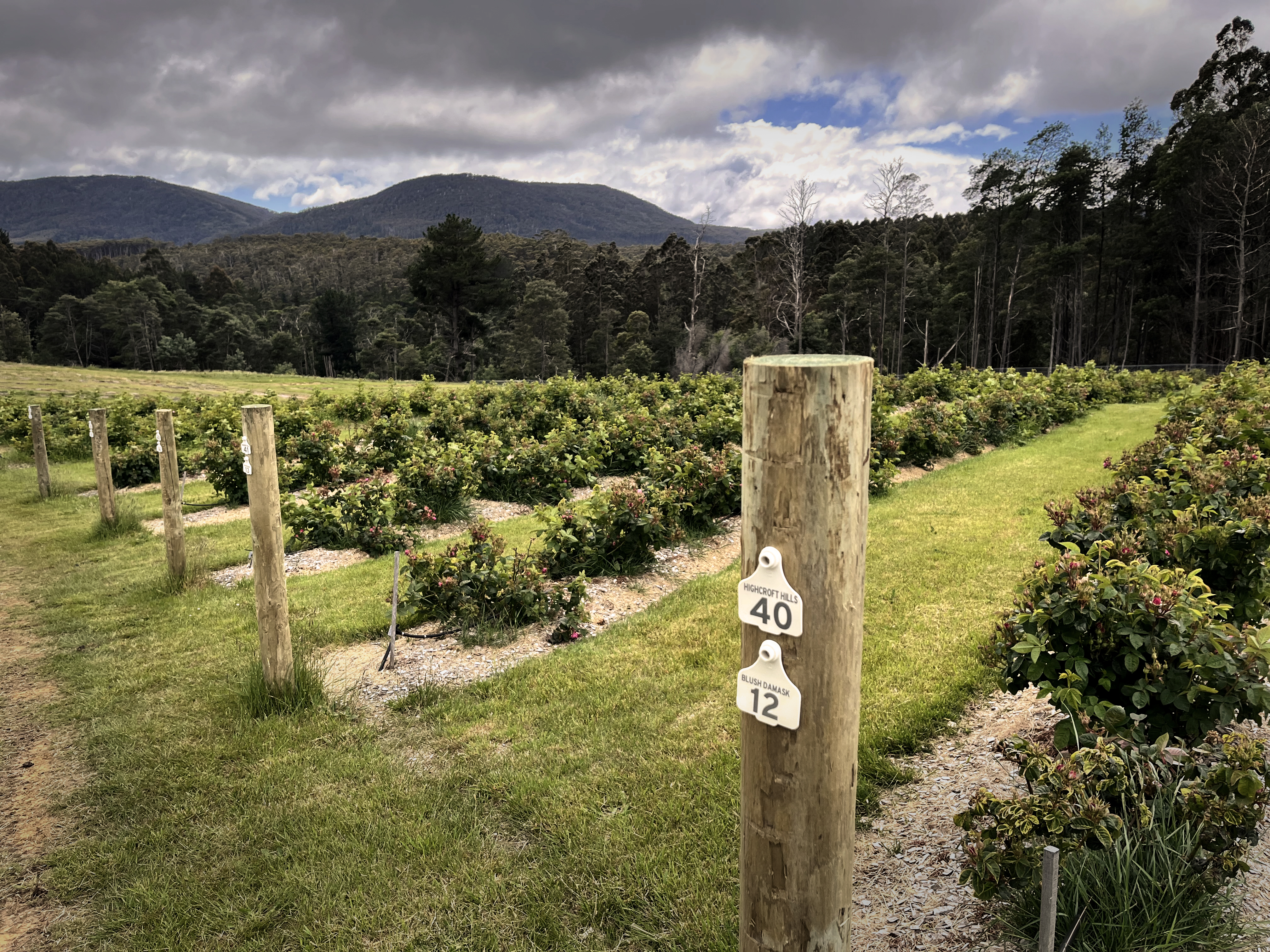
We practice minimal-intervention cultivation. Working hand-in-hand with the land’s seasonal rhythms, we employ a purposely small production of 10,000 rose plants across 7 acres to protect the balance of our ecosystem.
We seek to support the natural resilience of our plants and encourage their full potential. Natural treatments such as sulfur, copper and plant extracts are rotated to maintain plant health while preserving soil and ecosystem integrity.
Highcroft Hills sits on a geological mosaic
Dark, crystal-speckled Jurassic dolerite weathers into well-structured, clay-loam soil. Ancient eucalyptus forests slowly break down into organic matter; releasing nutrients into the earth.
Our unique location provides the free-draining earth that gifts Highcroft Hills roses with dense petal structures and exceptional bioactive compound availability.
We augment the natural soil pH with crushed oyster shells. Farmed locally for the restaurant industry, we return the discarded shells to the land. Providing calcium to the soil and supporting the perfect pH range needed for exceptional roses.
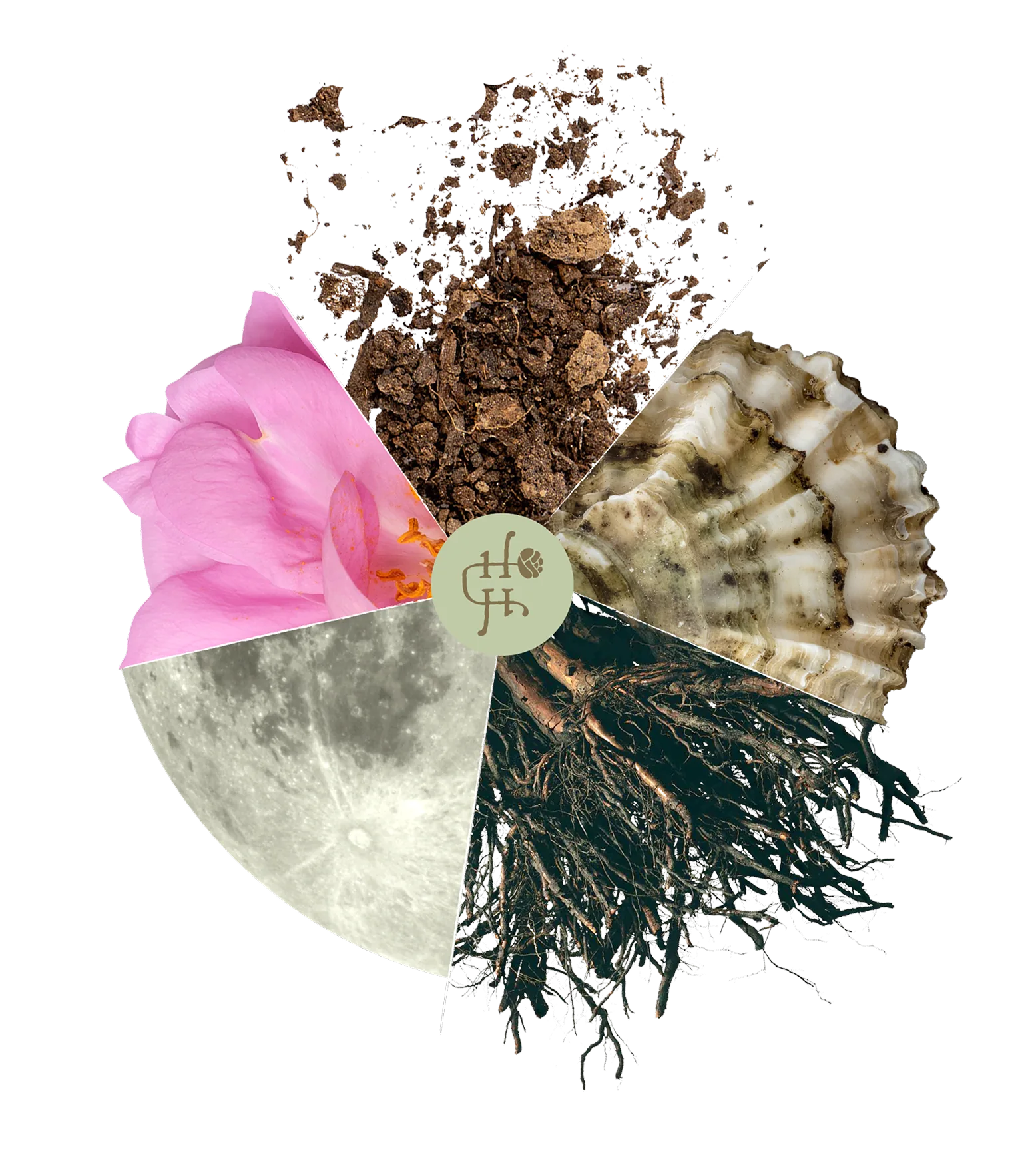
Essential Elements
A budding rose is the visual culmination of a journey that began in the soil, many months ago.
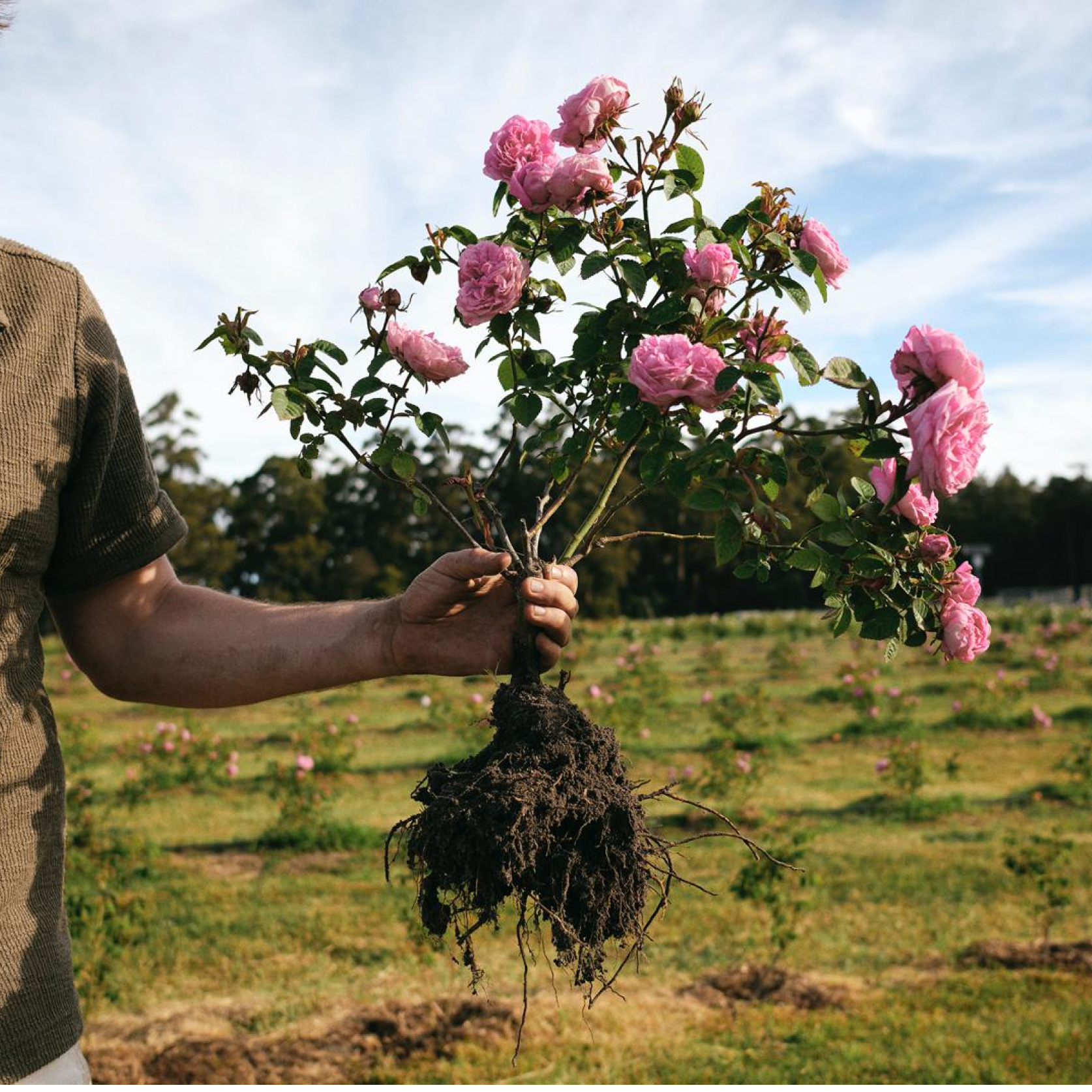
Our soil is alive with billions of organisms that cycle nutrients back into the earth and into the root system. These roots breathe and drink from the soil. They anchor themselves to it. They weather the seasons in it. The soil’s nourishment gives every rose plant strength and energy to blossom. If we take care of our soil, it will help us take care of the rest.

The soil
Everything begins with the soil. Ours is rich in organic matter that mineralises natural compounds, making them bioavailable for root uptake, providing essential nutrients that are the foundation of healthy plants.

The minerals
Discarded by the restaurant industry, upcycled by us. Rich in calcium and naturally alkaline, we add oyster shells to our soil to neutralise the pH and boost plant cell development for stronger stems and more vibrant blooms.

The root system
Hidden below ground, the roots breathe in oxygen. Absorb water and nutrients. Store energy. And anchor the plant in place to help it weather the elements. They act as the plant’s essential organs. Unseen but never underestimated.

The seasons
From winter dormancy to spring harvest, we follow nature’s pace and rhythms. As the November moon waxes to full strength, when the winds slow and the air and soil warm, a year of patient work blooms and blossoms.

The roses
Our five varieties of Rosa Damascena and Rosa Centifolia were each selected for their unique bioactive profiles. They’re hand-picked in the cool, dawn light when the bioactive compounds are at their apex, preserving their purity and potency.
“In a place like nowhere else, preserving what we have becomes even more important.”
Atmosphere of Purity
The Roaring Forties winds travel for thousands of kilometres across the open Southern Ocean. Uncontaminated by dust, industrial pollutants or smoke, they deliver the cleanest air in the world to our door.

Extremely low Particulate Matter counts (<5 µg/m³) mean the air quality at Highcroft Hills is significantly cleaner than large agricultural zones. Cleaner air means cleaner rain and soil, promoting healthier plant growth and benefiting bioactive compound purity. A pure expression of the terroir.
Pristine air means pristine rain
Over 900mm of rain falls across Highcroft Hills each year. Falling evenly across the growing season, consistent rainfall creates a stable foundation for the soil, making it easier to irrigate precisely and efficiently. Together, this promotes even growth and heavier bioactive compound saturation using fewer resources.

The natural water table under Highcroft Hills supports the water sources on our property. Seasonally replenished with rainfall, it helps provide year-round sustenance to our roses.
Rainfall
Every drop counted. Every millimetre accounted for.
900mm of rain per year may sound like a lot, but roses are thirsty plants. So every raindrop is precious. We leave nothing to chance.
Once the air temperature rises above 20ºC, each rose plant needs the nourishment of 10 litres of water per week. We track total rainfall with precision. We meticulously measure soil moisture levels. And, when necessary, we support each rose’s root system with water from our aquifer. We work in partnership with nature to help our rose plants reach their fullest expression.

Our rare and remarkable wildlife – some found only in Tasmania
We share our home with unique and extraordinary flora and fauna. But on an island that has seen extinctions of its native species, we see our role as one of stewardship. We are an active part of our ecosystem, ensuring that we do no harm, regenerate resources and support the archipelago’s rich biodiversity to maintain nature’s precious balance.

Tasmanian Tiger
Thylacinus cynocephalus
Status: Extinct
Native to: Tasmania
(also historically mainland Australia and New Guinea)
GOLD-TIPPED LEAFCUTTER BEE
Megachile maculariformis
Family: Megachilidae

SWIFT PARROT
Lathamus discolor
Status: Critically Endangered

SOUTHERN LADYBIRD
Cleobora mellyi
Native to: Tasmania, southern Australia

TASMANIAN TREE FERN
Dicksonia antarctica
Native to: Tasmania, southeastern Australia
TASMANIAN MASKED OWL
Tyto novaehollandiae castanops
Status: Endangered in Tasmania

ANGASI OYSTER
Ostrea angasi
Native to: Southern Australia
Each season has a purpose. We let nature set the pace
From growth to harvest, blooms to dormancy, as our rose plants journey through the natural year, each season presents its own challenges and opportunities.




A year of work blossoms and blooms
Our roses are hand-picked under a rising spring sun, when bioactive compound availability is at its peak.
For 3-5 weeks during late spring, a year of patient nurturing comes to fruition. Highcroft Hills is alive with the colour and fragrance of 10,000 rose plants. We harvest early in the morning, before the sun’s rays heat up the day and dry out the oil-rich petals. Each of our mature, 5-year-old plants yields 5 kg of flowers. But it can take 3000 kg of petals to make just 1 litre of rose oil. Pure. Potent. Precious.

Unlocking the complete expression of our terroir
We produce Essential Rose Oil, Rose Hydrosol, and Full-Spectrum Rose Extract. By providing these three expressions, we can ensure that the full potential of our roses is realised in a format that best suits our partners needs. We utilise advanced extraction methodologies to fully capture and preserve the complete bioactive spectrum, from the light, aromatic molecules that sink deep into the skin, to the rich, protective oils that strengthen the surface barrier.
A place like no other

Welcome to our garden
On our pristine property in the Tasmanian Archipelago we cultivate the finest old garden varietals of rosa damascena and rosa centifolia to masterfully craft pure and potent rose botanicals. We partner and collaborate with like-minded artisans to create premium products imbued with the essence of our exquisite terroir.